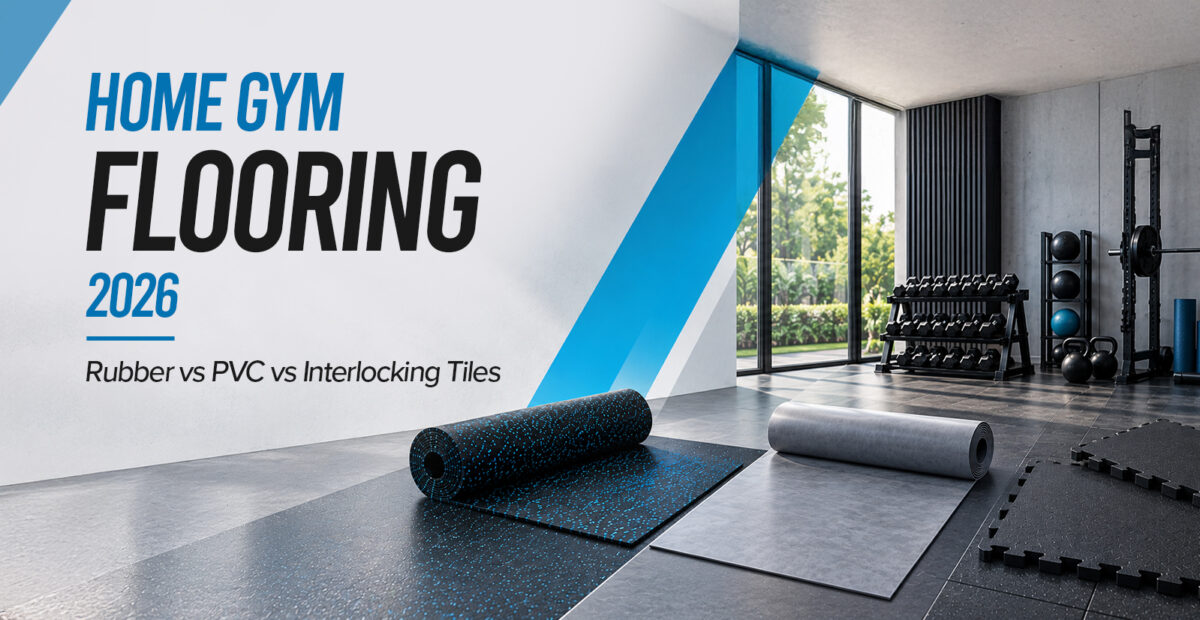
Best Home Gym Flooring in India: Rubber vs PVC vs Interlocking Tiles (2026)
Setting up a home gym comes with a constraint commercial gyms rarely deal with: you’re usually working inside an apartment, a spare room, or a garage, not a purpose-built facility. That changes what good home gym flooring actually looks like. Noise travels to the flat below you. Space is limited. And you probably don’t want to hire a flooring contractor for a week-long installation.
This guide compares the three most common home gym flooring options in India, rubber, PVC, and interlocking tiles so you can pick the right one for your space, budget, and equipment.
What Home Gym Flooring Needs to Do Differently
Before comparing materials, it helps to know what you’re actually optimising for at home:
- Noise and vibration control: especially critical in apartments with neighbours below
- Easy installation and removal: many home gyms are set up in shared or rented spaces
- Protecting the existing floor: tiles, wood, or marble underneath need protection, not permanent alteration
- Space efficiency: most home setups are 100-300 sq ft, so cost per sq ft matters less than fit and finish
Rubber Flooring for Home Gyms
Rubber is the go-to choice for anyone doing weight training, HIIT, or using heavy equipment like power racks and dumbbells at home.
Pros:
- Excellent shock absorption and noise reduction
- Highly durable handles dropped weights without cracking
- Easy to clean and resistant to sweat and moisture
Cons:
- Heavier and slightly trickier to install solo
- Higher cost than PVC or basic foam
- Rubber smell can be noticeable initially in enclosed rooms
Best for: strength training, home gyms with dumbbells/barbells, ground-floor or well-insulated apartments.
PVC/Vinyl Flooring for Home Gyms
PVC flooring is a popular pick for home gyms that lean towards cardio, yoga, or light bodyweight training rather than heavy lifting.
Pros:
- More affordable than rubber
- Wide range of finishes can look closer to a “studio” aesthetic
- Lightweight and easier to install and clean
Cons:
- Less shock absorption not ideal under heavy free weights
- Can show wear faster under repeated heavy impact
- Less effective at noise/vibration control
Best for: cardio equipment (treadmills, bikes), yoga/stretching corners, home studios with lighter use.
Interlocking Foam Tiles for Home Gyms
Interlocking tiles, usually foam or PVC-based are the most common DIY-friendly option, and often the first flooring people buy when starting a home gym.
Pros:
- Very easy to install and remove without tools or adhesive
- Budget-friendly and sold in small, flexible quantities
- Good for multi-purpose rooms since it can be lifted when not in use
Cons:
- Less durable under heavy or pointed equipment (machine feet, rack posts)
- Seams can shift or gap over time with heavy use
- Not ideal as a long-term solution for serious strength training
Best for: beginners, multi-use rooms, light equipment setups, renters who need a removable solution.
Rubber vs PVC Gym Flooring: Quick Comparison
| Factor | Rubber | PVC/Vinyl | Interlocking Tiles |
| Cost | Higher | Moderate | Lowest |
| Durability | Very high | Moderate | Moderate |
| Noise reduction | Excellent | Fair | Good |
| Installation | Moderate effort | Easy | Very easy |
| Best use | Heavy lifting | Cardio/light use | Multi-purpose, beginners |
Which One Should You Choose?
- Dedicated strength room, apartment building: Rubber flooring the noise and shock absorption pay for themselves.
- Cardio corner or yoga space: PVC/vinyl is more than enough and costs less.
- Spare room used for multiple purposes: Interlocking tiles let you set up and pack away as needed.
- Garage or standalone space with no noise concerns: Rubber rolls are the most durable long-term option regardless of budget, since noise isn’t a constraint.
If you’re combining equipment types, say, a treadmill plus a power rack, it’s common to zone your flooring at home too: PVC or thin rubber under the cardio machine, thicker rubber tiles under the free-weight area.
FAQs
Is rubber or PVC better for a home gym?
Rubber is better for heavy lifting and noise-sensitive apartments; PVC is a lighter, more affordable option for cardio and light training.
Do I need professional installation for home gym flooring?
No, interlocking tiles and most PVC options are designed for DIY installation. Rubber rolls can be self-installed too, though larger areas benefit from professional fitting for clean seams.
What’s the cheapest home gym flooring option in India?
Interlocking foam tiles are generally the most budget-friendly starting point, especially for smaller setups.
Will gym flooring damage my existing floor?
No, all three options are designed to sit on top of your existing floor without adhesive damage, provided you use gym-specific (not adhesive-bonded) products in a rental setup.
Ready to Build Out Your Home Gym?
Once your flooring is sorted, the next step is choosing equipment that fits your space and goals. Browse our Home Gym Equipment range or check the full Commercial Gym Flooring Guide for a deeper look at materials and installation.