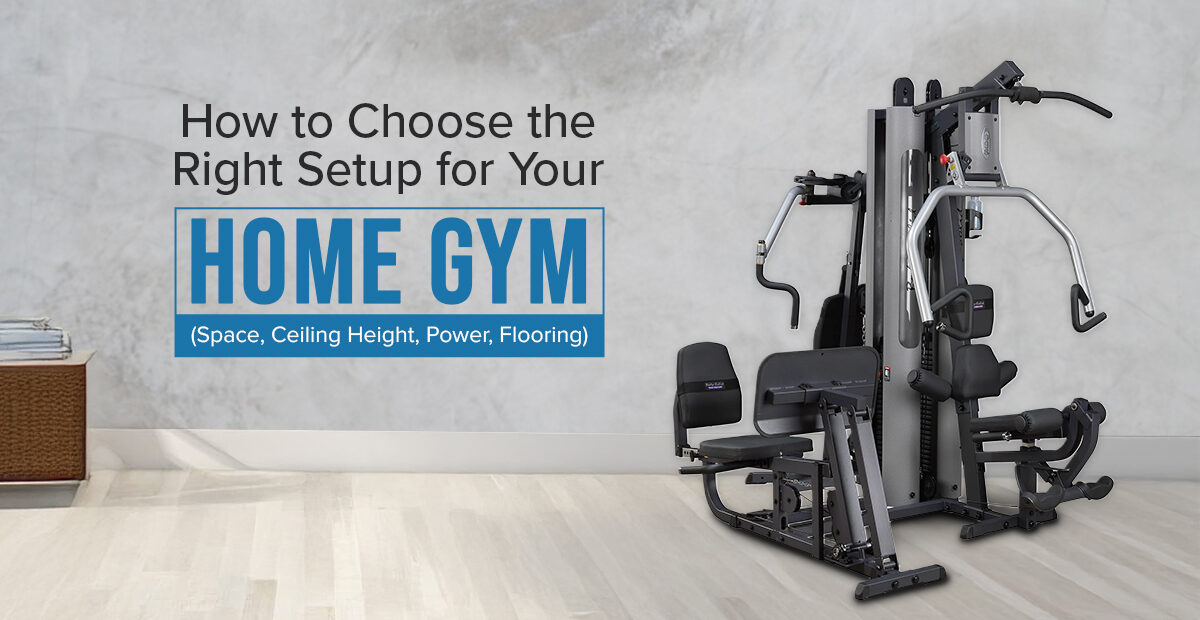
How to Choose the Right Setup for Your Home Gym
Setting up a home gym is one of the smartest investments you can make in your health, especially if you’re busy or prefer exercising in the privacy of your home. But before you rush into buying equipment, there are some key factors to consider- from space and ceiling height to power supply and flooring. With careful planning and smart choices, you can turn even a modest apartment corner into a functional, motivating home fitness space.
Space & Layout Planning
When thinking about a “home gym setup”, start by assessing how much room you can realistically spare. Ideally, a small room around 100–150 sq ft (or even a dedicated section of a larger room) is enough for a compact, functional gym, especially when your workouts involve things like resistance bands, mats, dumbbells, or a foldable treadmill.
If space is constrained, plan zones- e.g. a cardio area (treadmill or bike), a strength zone (dumbbells, bench), and a mobility/stretch zone (mat or floor space). Keep clear walkways and some breathing space around equipment so your workout environment feels open rather than cluttered.
Ceiling Height & Safety Clearance
An often-overlooked factor is the ceiling height, particularly if you plan on lifting weights overhead or doing pull-ups or overhead presses at home. As a good rule of thumb, aim for a ceiling that’s at least about two feet higher than your fully outstretched overhead reach.
Ceilings around 8–9 feet usually suffice for most equipment and exercises. In lower-ceiling rooms, go for compact or low-profile equipment (adjustable benches, foldable cardio machines) rather than bulky racks or overhead rigs.
Good lighting and proper ventilation also make a difference in home gym setup, a bright, well-aired gym not only feels more inviting but also reduces dampness, preserves equipment health, and helps you train comfortably.
Power Supply & Electrical Considerations
If you plan to include powered equipment like treadmills, stationary bikes, or ellipticals, make sure your chosen space has proper electrical wiring. Under-powered outlets or long extension cords can be unsafe and may overload circuits. Also, check that power outlets are placed conveniently, without causing trip hazards.
If your home has limited wiring, another option is to select manual or low-power gear (e.g. adjustable dumbbells, resistance bands, body-weight workouts). This keeps your setup simple, safer, and energy-efficient.
Flooring- The Foundation of a Smart Home Gym
Perhaps the most important under-the-feet decision is flooring. Gym flooring affects safety, comfort, noise levels, and the life of your floors. For home gyms, options like rubber mats/tiles, foam mats or interlocking puzzle mats are widely used. Here are some gym flooring guides for you- each with pros and cons.
- Rubber flooring (tiles/rolls): Durable, shock-absorbing, and ideal for heavy weightlifting or cardio machines. Rubber handles weight impact, protects subfloors, and reduces noise, a great choice if you drop weights or use machines.
- Foam or lighter mats: Affordable and comfortable for bodyweight workouts, yoga, or stretching, though not ideal for heavy equipment or weight drops.
- Hybrid- turf or mixed zones: If you want functional-training zones (e.g. bodyweight drills, mobility work, cardio), consider turf or hybrid surfaces, many gyms blend turf + rubber to get versatility.
If you anticipate heavy lifting or dropping weights, invest in thicker, high-density mats or rubber tiles. Interlocking “puzzle-style” mats can make installation easy and allow flexibility to rearrange later.
In summary, a successful home gym setup doesn’t depend solely on the equipment, it’s equally about the space, layout, safety and foundation under your feet. Whether you’re working with a small apartment corner or a spare room, smart planning goes a long way.
At Fitness World, we believe in empowering you to build a gym that aligns with your lifestyle, not just by selling quality equipment, but by helping you think through space, layout and flooring so your home fitness space becomes a real extension of your wellness journey.
Ready to start building? With the right space-planning, ceiling clearance, safe power access and durable gym flooring, your home gym setup can be a place you love to train in.