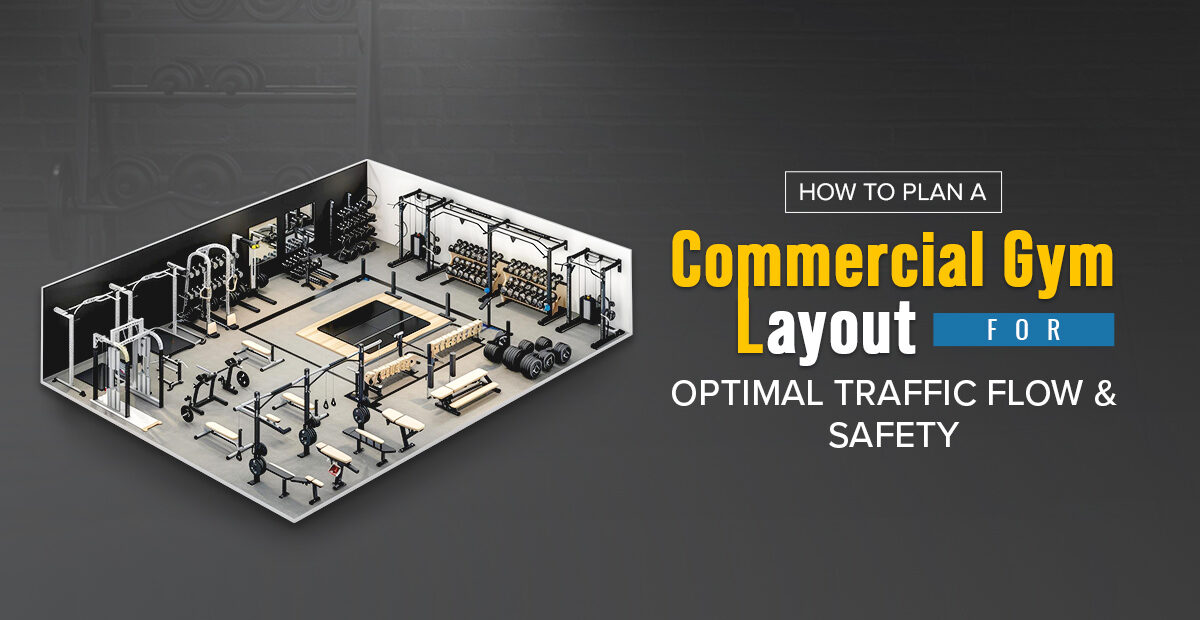
How to Plan a Commercial Gym Layout for Optimal Traffic Flow & Safety
Designing a commercial gym is more than just buying equipment and filling up the floor, how you lay out the space matters hugely for both member experience as well as their safety. A well-thought-out gym layout design enables smooth movement, prevents congestion, and ensures that members can work out confidently. Here’s how to plan your commercial gym setup in a way that optimises traffic flow and enshrines safety.
1. Define Clear Functional Zones
A smart commercial gym setup begins with zoning. Divide the floor into logical areas such as: a cardio zone, strength-training zone, functional training or circuit area, stretching/mobility space, and a recovery or cooldown section. By grouping similar fitness equipment together, you reduce cross-traffic and help members navigate intuitively.
2. Plan Traffic Flow Strategically
Traffic flow is the backbone of an effective gym layout. Use a circular or looped floor plan, which many gym design experts recommend, to guide members through the facility naturally, preventing bottlenecks.
Design wide, clear pathways (ideally 1.2–1.6 m) between equipment clusters so people can move freely, even during busy hours.
Place high-traffic items, such as cardio machines, near the entrance or window side to manage movement more effectively.
3. Prioritize Safety in Layout
Safety is non-negotiable in a gym. Start by ensuring adequate spacing: leave enough clearance, ideally 2–3 feet, between machines so that members don’t feel cramped and have space to move.
Use non-slip, shock-absorbing flooring to reduce injury risk and improve hygiene.
Clearly mark emergency exits and ensure they’re accessible from all corners of the gym.
Include visible safety signage, first-aid kits, and even AEDs if domain-appropriate, so your design supports emergency preparedness.
4. Modular & Flexible Design for Adaptability
A modern commercial gym setup should be future-ready. Use modular fitness equipment and mobile racks that can be reconfigured as member needs shift or as new fitness trends emerge.
Flexible zones (for example, with foldable partitions) let you repurpose space for group fitness classes, workshops, or personal training.
5. Enhance Visibility & Supervision
For both safety and operational efficiency, good sightlines are crucial. Place tall machines like rigs or power racks along walls, so that coaches can see across the floor easily.
Use mirrors behind free weights, not just for form correction, but also to help users stay aware of their surroundings and avoid collisions.
Strategically locate your reception, water stations, and sanitization points near common pathways so they don’t interrupt traffic.
6. Prioritize Hygiene & Wellness Amenities
A safe gym isn’t just about layout- it’s also about hygiene. Integrate hand-sanitizer stations, towel stations, and easy-to-clean surfaces to maintain cleanliness.
Ensure good ventilation and air circulation, especially in high-sweat zones. A well-planned HVAC system improves comfort, minimizes odor, and enhances member safety.
7. Brand-Aligned Aesthetic Design
Finally, align your fitness studio design with your brand identity. Use your brand colors, motivational signage, and polished aesthetics. A cohesive look builds trust and makes members feel at home.
Lighting also matters in gym layout design : combine natural light (near windows) with energy-efficient LEDs to maintain a safe, energetic, and welcoming environment.
Conclusion
Planning a commercial gym layout isn’t just about putting equipment in a space. It’s about creating flow, ensuring safety, and building an experience that resonates with your brand values. By focusing on intelligent gym layout design, thoughtful zoning, and modular flexibility, Fitness-World can deliver a fitness studio design with premium quality and certified fitness equipment that feels secure, intuitive, and inspiring. When you build smart, your members feel confident every time they walk in.