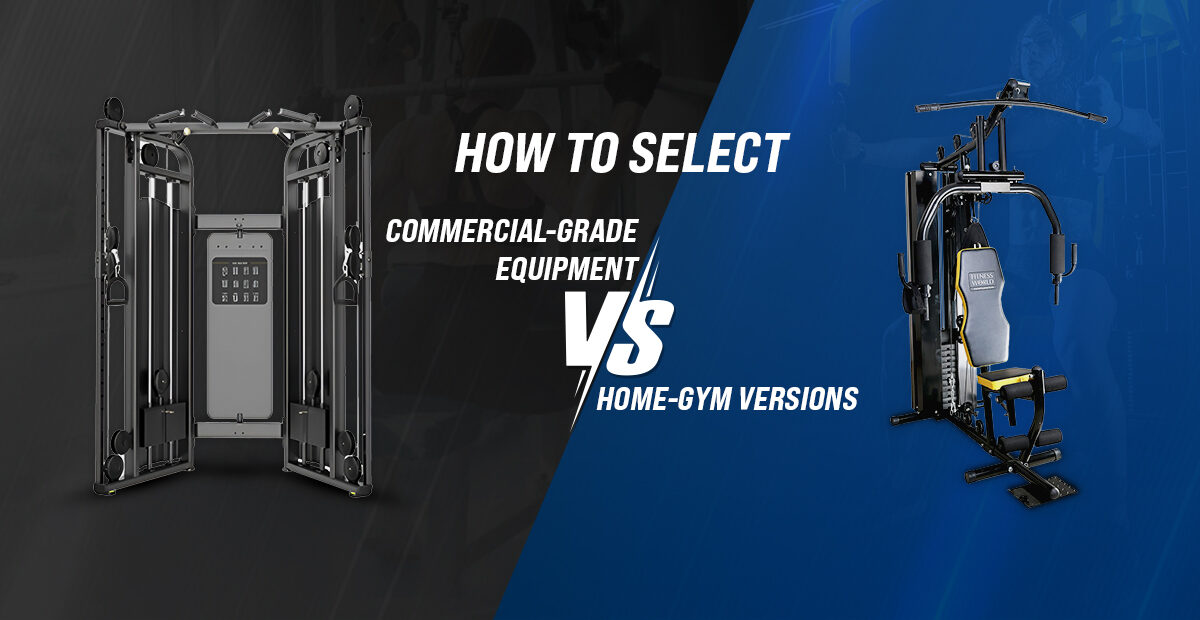
How to Select Commercial-Grade Equipment vs Home-Gym Versions
When you’re serious about building strength, whether at home or for a commercial set-up, deciding between standard home-gym gear and “commercial-grade” machines can make a big difference. In this post, we examine home gym vs commercial gym, highlight key aspects of commercial gym equipment, and offer a fitness equipment buying guide to help you make the right decision.
What defines Commercial-Grade Equipment
Commercial gym equipment is engineered to handle heavy use day after day, often by multiple users of varying fitness levels. There are certain structural and design qualities that distinguish commercial-grade machines from home-use versions.
- Heavy-duty build and durability: Commercial gym equipment are typically built with thick, heavy-gauge steel frames and reinforced construction to withstand repeated stress, high loads, and daily usage, often 8-12 hours a day in a busy gym.
- High weight capacity and structural stability: Commercial machines can support heavy weights and stay sturdy under load, making them suitable for serious lifters, multiple users, or intense training sessions.
- Ergonomics, adjustability and features: Seats, handles, cables, resistance settings- everything is adjustable and designed ergonomically to suit different body types and training styles. Commercial gear often offers smoother mechanics, reliable movement patterns and safety features such as stable platforms, safety rails, and durable upholstery.
- Versatility and range: Commercial setups tend to offer a wider variety from functional trainers and multi-stations to cardio machines, benches, racks and more, enabling strength training, cardio, rehab, or athletic conditioning.
Given these advantages, commercial-grade equipment delivers a longer lifespan, consistent performance, and the ability to adapt to diverse training needs.
Why Some People Prefer Home-Gym Equipment
- Affordability & lower initial cost: Compared to outfitting an entire commercial-grade gym, setting up a basic home gym even with a treadmill, bench, rack or multigym can be far cheaper.
- Convenience and privacy: Working out at home means no commute, no waiting for machines to free up, and the freedom to workout on your own schedule and terms.
- Ideal for modest needs / limited space: If your training goals are simple maintenance, cardio, light strength work or space is limited, home-gym equipment may be enough. You don’t need a large facility or dozens of machines to make progress.
For many people in urban India- where space and budget can both be constraints, a well-thought-out home gym can deliver significant fitness returns.
Home Gym vs Commercial Gym — Which Should You Choose?
There’s no one-size-fits-all answer. Your decision should depend on:
- Your fitness goals: If you aim for serious strength training, heavy weights, progressive overload, or plan to accommodate multiple users (family members, clients), commercial-grade gear is worth investing in. If you want basic strength maintenance or cardio from home, home-gym gear may do the job.
- Usage frequency and intensity: A seldom-used treadmill or bench can last at home. But if you train frequently or intensively or run a gym, durability and reliability count.
- Space availability: Commercial gym equipment occupy more space and require proper layout, ventilation and flooring. A compact apartment might not accommodate them easily.
- Budget and long-term value: Commercial machines cost more upfront, but because of their robustness and longevity, they can be more cost-effective per use over time. Home-gym equipment might be cheaper initially, but could wear out faster or give limited functionality.
- Flexibility and lifestyle: If you prefer flexibility, convenience and privacy and don’t need advanced gym infrastructure- a home gym could meet your needs. If you value variety, performance, safety and professional-grade equipment, commercial machines make more sense.
A Simple Buying Guide for Fitness Equipment
Whether you pick home-gym gear or commercial-grade machines, here are some practical tips:
- Prioritize quality over quantity: A few well-built versatile machines (e.g. adjustable bench + rack + cable trainer) often beat many cheap/basic ones.
- Check materials & build specs: For commercial gear: thick steel frames, reinforced welds, heavy-duty components. For home gear: solid construction, user-friendly ergonomics, and easy maintenance.
- Match equipment to your goals and space: Don’t buy a bulky leg press if you mostly do bodyweight or cardio workouts. Plan space and layout carefully before buying.
- Safety, comfort and usability matter: Smooth mechanics, ergonomic seats/handles, adjustability, stable base, and safety rails- these make workouts more effective and safer.
At Fitness World, we believe in building fitness environments that last- whether it’s a commercial gym, club, or home gym. That’s why we offer a wide range of commercial-grade gym equipment engineered for durability, performance, and long-term value with everything from cardio machines and free-weights to functional trainers and multi-stations.
In the end, choosing between home-gym and commercial-grade equipment comes down to your goals, space and long-term commitment. Invest wisely, and build a fitness setup that supports real progress.